
The fibre
White gold
of the steppe
Mongolian cashmere comes from the soft undercoat of cashmere goats, which grow an exceptionally fine, dense fleece to survive winters on the Gobi and the Central Asian steppe, where temperatures can plunge to −40°C. That extreme climate is precisely what makes the fibre so prized.
What sets it apart
- Fibre finenessTypically 14–19 microns, among the softest natural fibres in the world.
- Natural colour rangeA wider range of natural colours than anywhere else: white, brown, grey and beige. White fibres take dye most readily.
- Warmth for its weightSignificantly warmer than sheep's wool at a fraction of the weight, and breathable and durable.
- Combed, not shearedNomadic herders use traditional combing rather than industrial shearing, which preserves the fibre's length and integrity.
Who produces it
| Producer | Role | Share |
|---|---|---|
| China | Largest exporter & processor | Processes 70% of the world's cashmere |
| Mongolia | Second-largest raw producer | ~40% of global raw supply, prized for quality, natural colour and nomadic provenance |
| Iran / Afghanistan | Minor producers | Much smaller markets |
While China leads in volume and processing capacity, Mongolian raw cashmere commands a premium for its purity and provenance.
Scarce by nature
About 150 grams per goat, per year.
Each goat yields only a small amount of usable cashmere, which makes it inherently scarce and valuable. In 2025 Mongolia exported nearly 2,800 tonnes of combed cashmere, worth over US$244.1 million.
A year's harvest, in tonnes
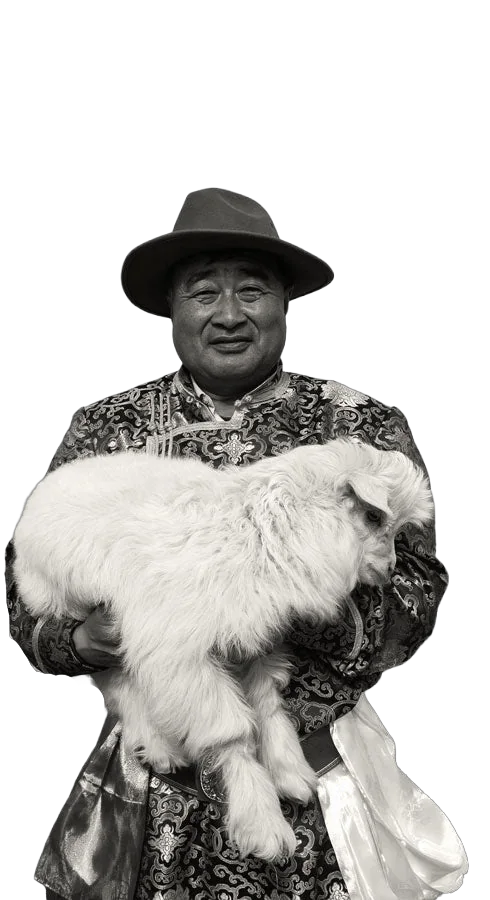
See it for yourself
Meet the herders. Comb the fleece. Follow it to the loom.
Nomadic Cashmere takes you to the source in spring, when the goats shed their winter undercoat, and then through the mills and weavers of Ulaanbaatar.